Autumn sealing in Hamilton: planning for weather uncertainty
23 May 2024
Autumn in Hamilton brings crisp mornings, vivid foliage, and cooler days - but for road maintenance crews working in one of New Zealand’s most tree-lined cities, it also brings heightened sealing risk. Shading from mature street trees, lingering moisture, lower pavement temperatures, and increasingly unpredictable rainfall all reduce the margin for error when applying chip seals late in the season.
Autumn also marks the final stretch of New Zealand’s road construction calendar. While many networks aim to complete surface sealing by April, a busy summer - or unforeseen delays - can push works into May, when weather windows narrow and the consequences of rain during curing become far more severe.
The risk: rain on fresh chip seals
For crews, rain arriving too soon after sealing can mean chip loss, binder disruption, rework, and public dissatisfaction. Once a site is live and production is underway, postponing can be impractical or impossible - particularly on high-traffic routes where lane closures and traffic management are already in place.
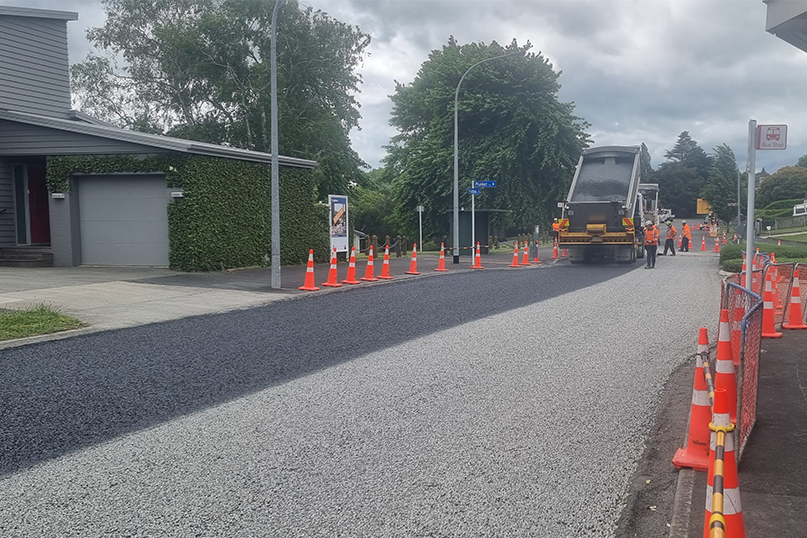
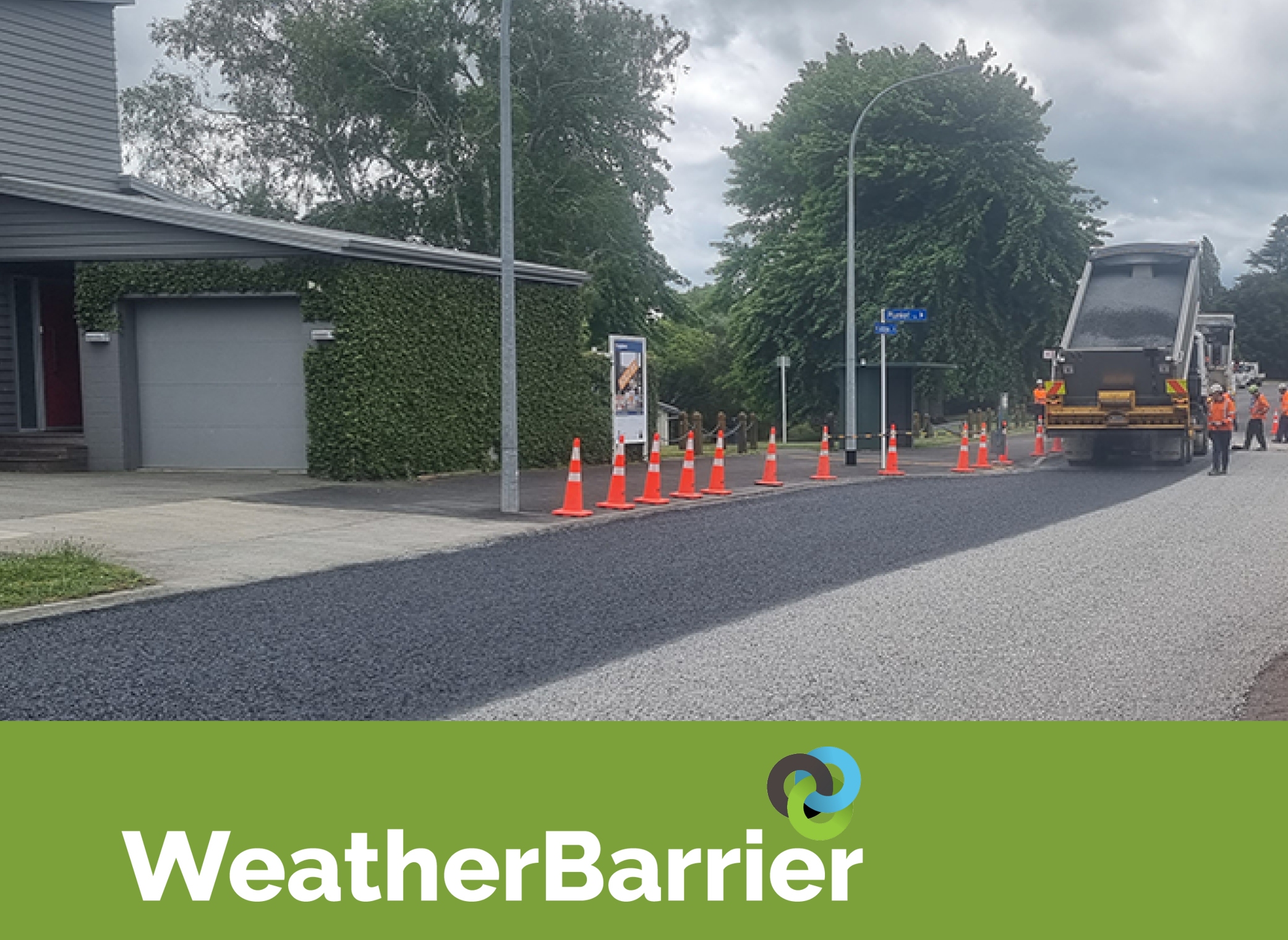
That was the situation facing a team working on Pukete Road in northern Hamilton.
When the forecast changes mid-shift
Aware of autumn’s risks, the crew selected a forecast window that initially appeared favourable: cloudy conditions with no rain expected until later that evening, despite showers earlier in the day. Preparations were completed and sealing began accordingly.
However, by lunchtime, the forecast shifted significantly. Rain was now predicted for the early evening - far earlier than expected - leaving the team with limited options. With works already underway and postponement not feasible, the seal would need to withstand whatever the weather delivered.
A proactive decision pays off
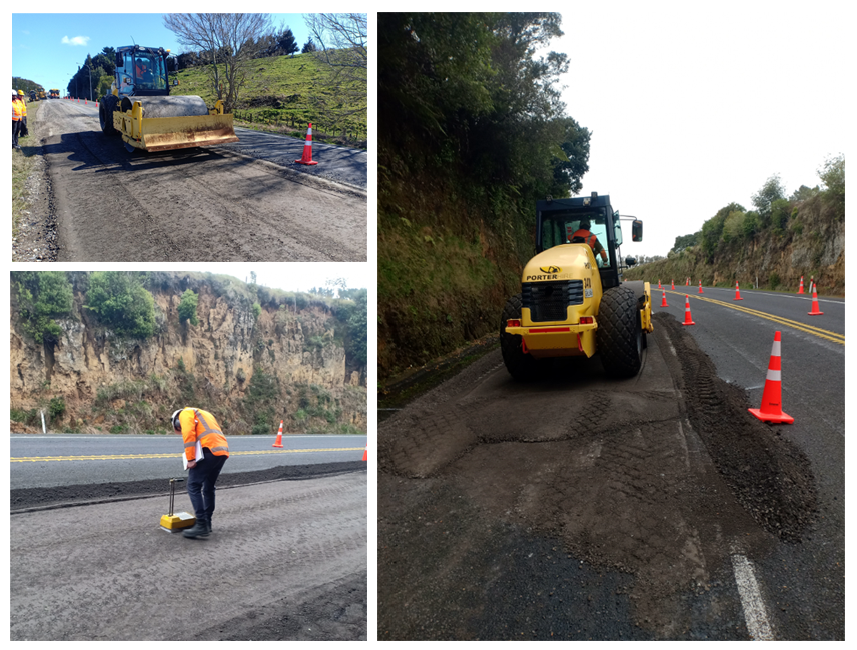
As part of their autumn risk mitigation strategy, the crew had proactively included Weather Barrier in the sealing membrane. Not long after sealing commenced, heavy rain arrived, with approximately 30mm falling across the site.
Despite the downpour, inspections showed:
- No evidence of chip loss
- No visible damage to the sealed surface
- No adverse environmental effects
The sealed section remained intact, allowing the project to proceed without rework, delays, or additional cost.
Weather Barrier: building resilience into late-season sealing
The Pukete Road project highlights the value of planning for weather volatility rather than reacting to it. By enhancing the seal’s early-life resilience, Weather Barrier helps protect fresh chip seals when unexpected moisture threatens curing - a critical advantage during shoulder-season works.
For councils and contractors navigating autumn programmes, it offers an added layer of confidence when ideal weather conditions can no longer be guaranteed.
The takeaway
As construction seasons tighten and weather patterns become less predictable, proactive tools like Weather Barrier enable crews to keep projects moving safely and successfully. In Hamilton, that foresight helped deliver a durable outcome - even when the weather failed to cooperate.