Sealing overnight in winter with Weather Barrier
05 July 2024
Would you choose to dry your laundry overnight instead of during the day?
Most people wouldn’t - because drying requires warmth, airflow, and time. Nighttime brings cooler temperatures, higher humidity, and slower evaporation. Night sealing with emulsion presents the same challenge.
The reality of night sealing in winter
For emulsion seals to cure effectively, they rely on favourable environmental conditions: warm pavement temperatures, low humidity, and sufficient time before traffic exposure. Night works already reduce those advantages. Add winter into the mix, and the risk increases sharply.
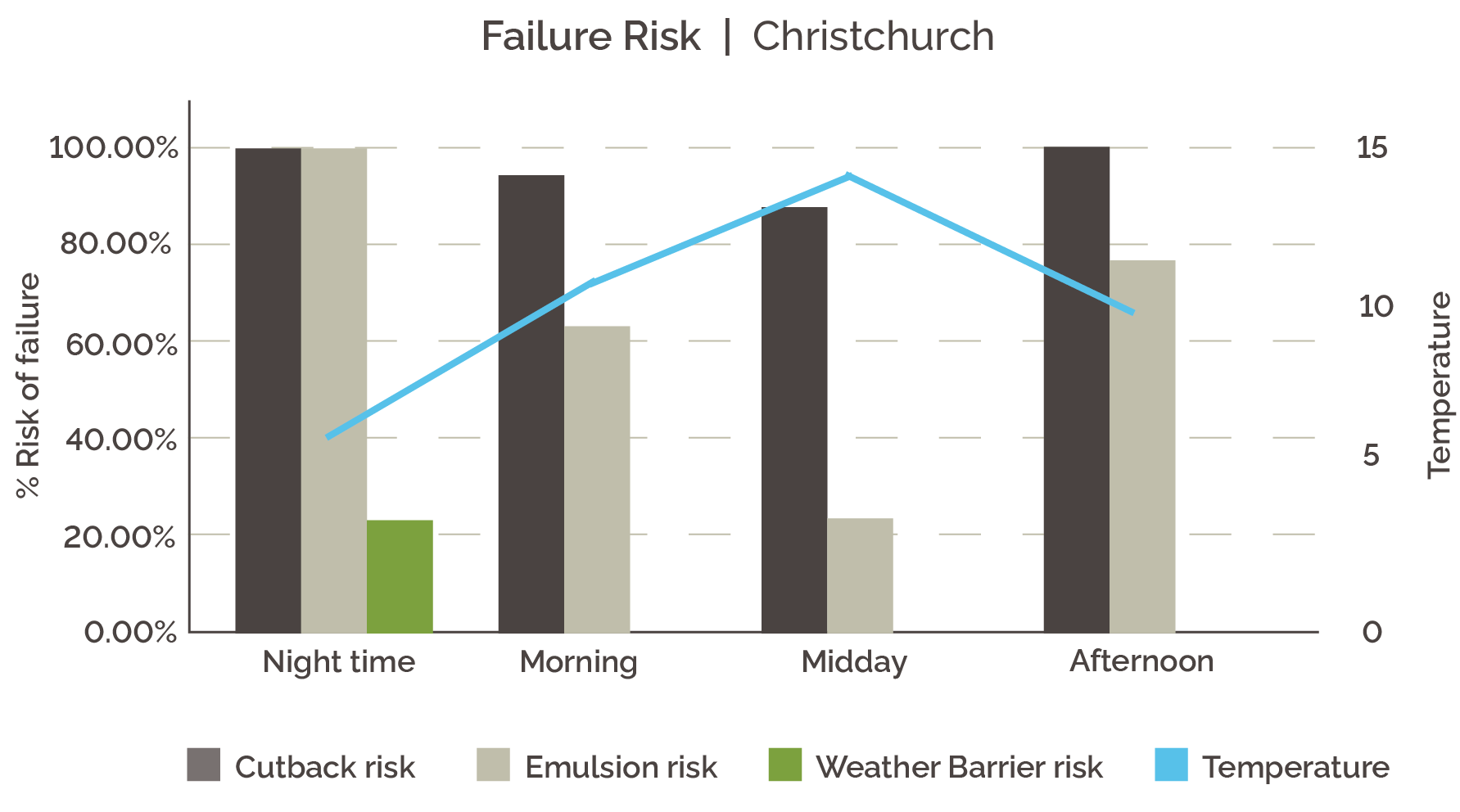
Now consider doing this on a winter night in Christchurch, where overnight temperatures can drop to around 5°C. Under those conditions, curing slows significantly, and the risk of chip loss or stripping rises - even for otherwise low‑risk seals. From a traditional sealing perspective, this would be an extreme scenario.
Why the trial went ahead
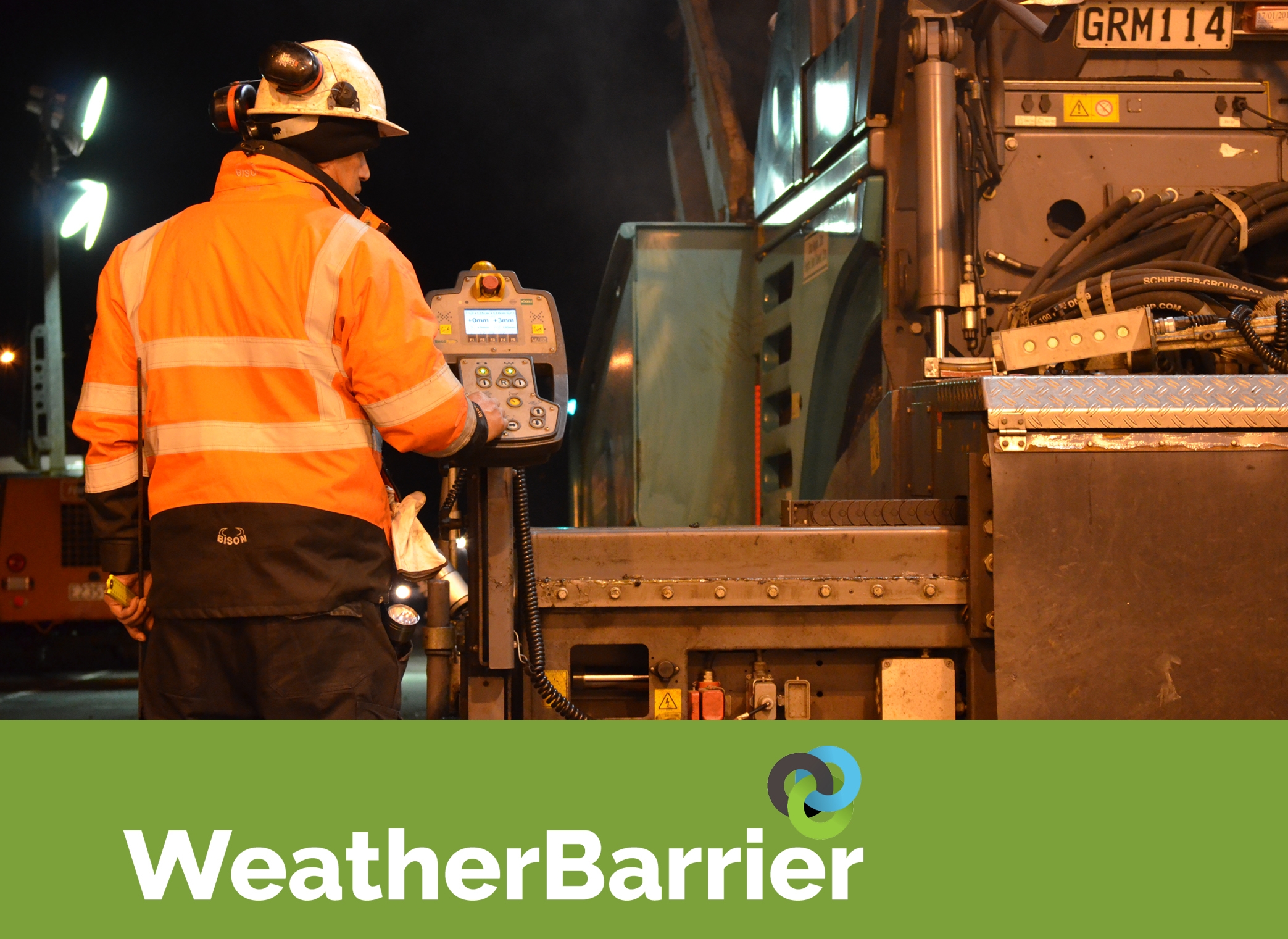
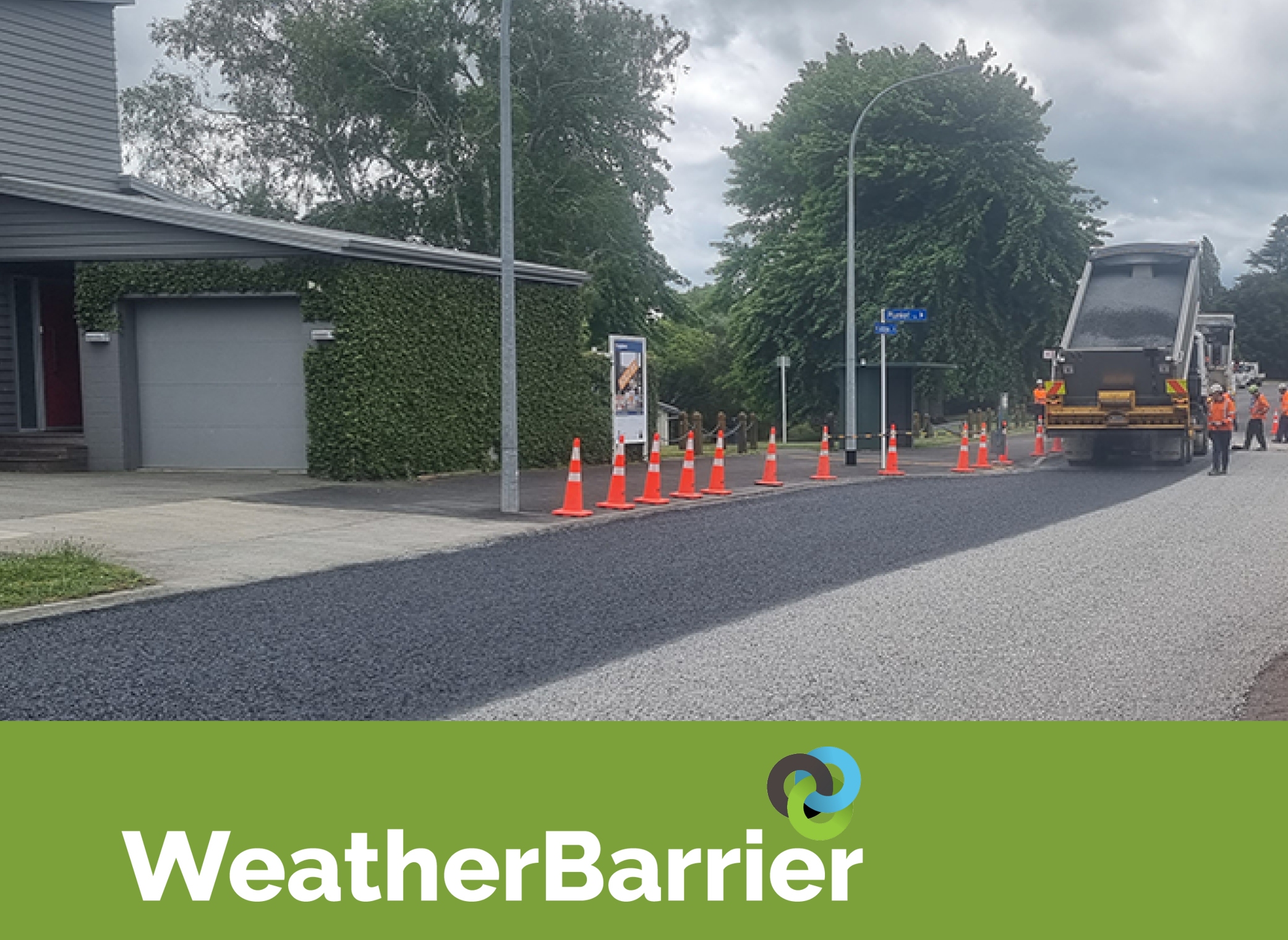
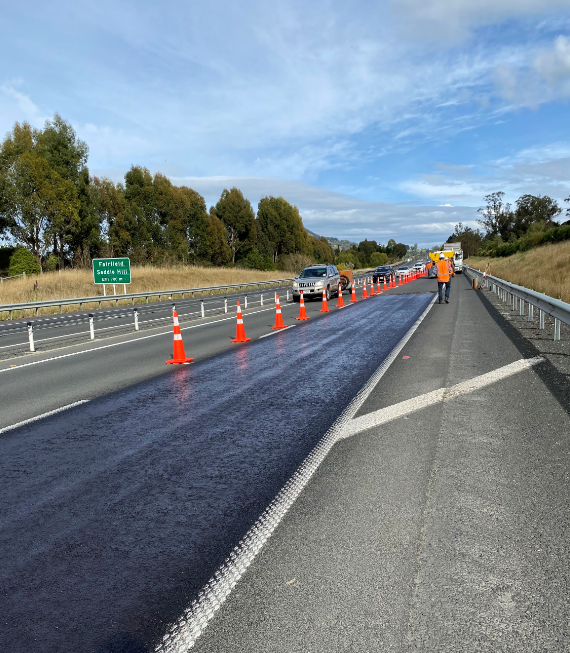
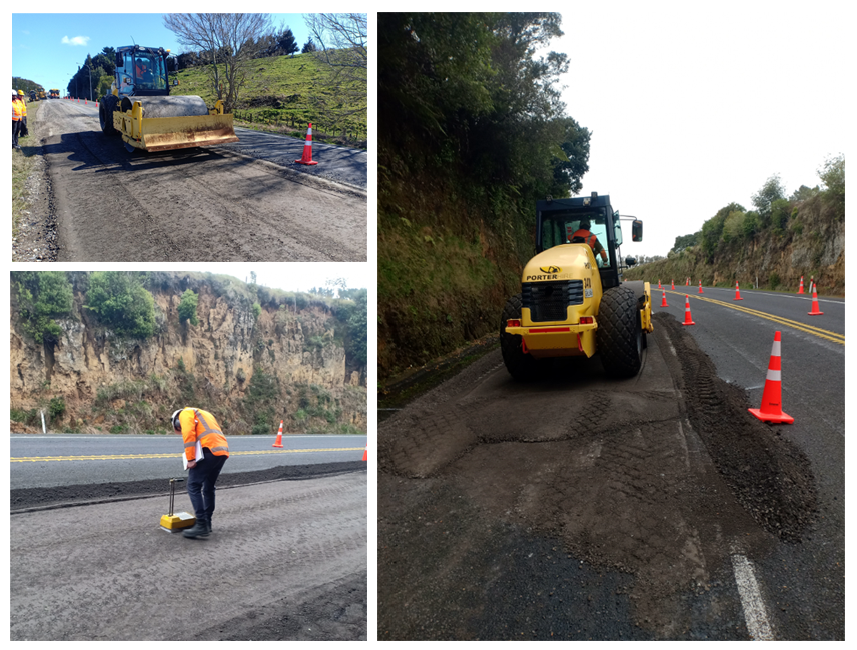
Despite the conditions, Downer and Road Science undertook a controlled night‑time sealing trial in Christchurch during winter. The objective was clear: test whether Weather Barrier could provide enough early‑life protection to allow a seal to cure successfully under conditions where failure would normally be expected.
Two comparable sites were prepared:
- One seal included Weather Barrier in the membrane
- The other followed the same design without Weather Barrier
The seal itself was low risk, with a low emulsion application rate - but the environmental conditions alone posed a significant challenge.
The turning point: curing under peak‑risk conditions
From a risk assessment perspective, Road Science initially expected some level of failure (as shown in graph below). Even minor chip loss was considered likely once traffic returned the following morning, given the cold overnight temperatures and limited curing window. However, the outcomes told a different story.
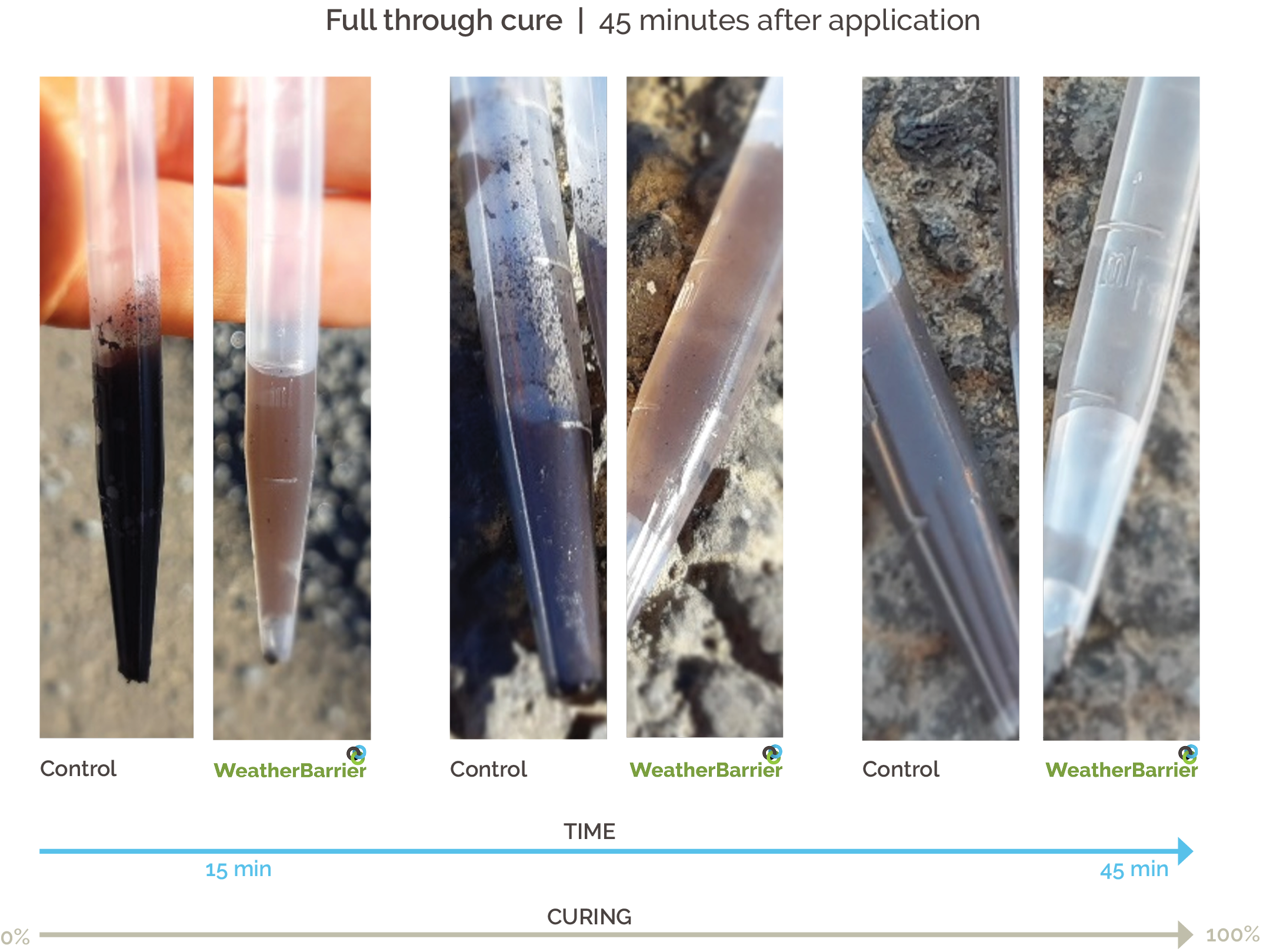
Showcasing the accelerated curing with Weather Barrier:
Comparing control sites vs Weather Barrier treated -
The results: a stark comparison
By the following morning:
- The untreated site had already begun to strip, with visible chip loss
- The Weather Barrier–treated site was fully cured before peak morning traffic reached it
The contrast between the two sites was immediate and clear. Despite identical conditions and design parameters, only the seal treated with Weather Barrier maintained integrity through the night.
What this means for winter and night works
This trial demonstrated that Weather Barrier can significantly reduce sealing risk even during:
- Night‑time works
- Winter conditions
- Low‑temperature curing environments
While not every winter or night seal will be appropriate, the Christchurch trial showed that - with the right mitigation tools - crews can safely extend their operational window when programmes, traffic constraints, or network demands leave limited alternatives.
The takeaway
Trying to cure an emulsion seal overnight in winter is usually a high‑risk proposition. But by proactively managing moisture and early‑life curing risk, Weather Barrier enabled a successful outcome where traditional sealing alone could not. For road owners and contractors facing increasing pressure to work outside ideal conditions, this project reinforced an important lesson:
resilience must be designed into the seal, not hoped for in the forecast.