Technical report and case studies of EME2 performane
30 September 2026
- Technically Speaking case studies
- Product overviews + highlights
- Asphalt binder products
- Asphalt products
Need a downloadable version of this report? Download HERE
A high-modulus asphalt is helping deliver stronger pavements, faster and with less construction risk for New Zealand.
Across some of Aotearoa's most challenging pavement projects, EME2 has helped reduce excavation, minimise construction risk, and accelerate delivery while providing the long-term performance demanded by today's transport networks.
Learn how in our latest technical report.

Executive Summary
EME2 (Enrobés à Module Élevé Class 2) is a high-modulus asphalt that combines structural strength, rut resistance, and fatigue performance. Its high stiffness and durability enable pavement designers to achieve the required structural capacity with significantly thinner asphalt layers, reducing excavation depth, construction risk, and programme duration.
EME2 is well suited to the following:
- High-stress, heavy-duty traffic environments, where both rut resistance and fatigue resistance is needed
- Vertically constrained environments where pavement thickness needs to be limited, such as tie-ins and underground services. EME2 can reduce asphalt depth by over 30% compared to conventional asphalt.
- Shallow or weak existing legacy pavements, where reduced milling depth can help avoid disturbing competent in-situ layers or the need for subgrade improvement and retain as much of the existing pavement structure as possible.
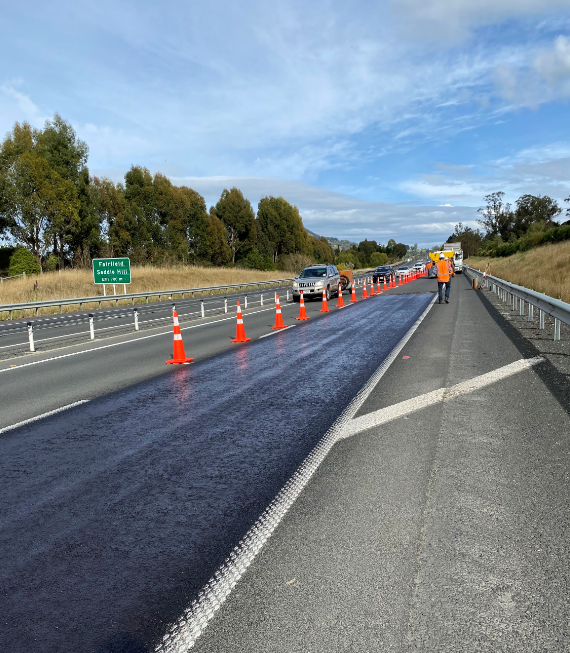
- Constrained construction windows and sensitive stakeholder, requiring faster delivery and reduced disruption. EME2 can be placed in a single lift of up to 130 mm, reducing paver runs and construction time.
The practical benefits of EME2 have been demonstrated on a range of projects across New Zealand. Its ability to reduce pavement thickness, minimise construction risks, and improve long-term performance has made it a preferred solution for many challenging projects.
On the Tirau to Waiuru project (A Downer-led project compressing four years of pavement renewal funding into just two construction seasons), EME2 was used on 67% of structural asphalt sites. EME2 reduced lift thickness by 30–40 % compared to conventional structural asphalt mixes both accelerating construction time and limiting construction risk.
At Wairere Drive and Te Rapa Road intersection, the pavement had developed severe rutting of up to 60 mm over a 4-year period. Pavement investigation identified that failure was occurring in the asphalt base layer. An EME2 inlay was selected to provide improved rut resistance under slow, high-stress loading while retaining the depth of the existing AC20 base layer that remained structurally sound. Performance data 10 years later confirms limited rut progression, no cracking detected, and no recorded maintenance faults.
EME2 provides a robust and well-proven option for long-life pavement rehabilitation. As with any asphalt treatment, EME2 is only as effective as the design and construction process behind it. Achieving the best results requires both best practice construction and a design approach that accounts for site specific constraints. EME2 is available nationwide and can be designed and supplied for projects across New Zealand.
Pavement Design – in simple terms
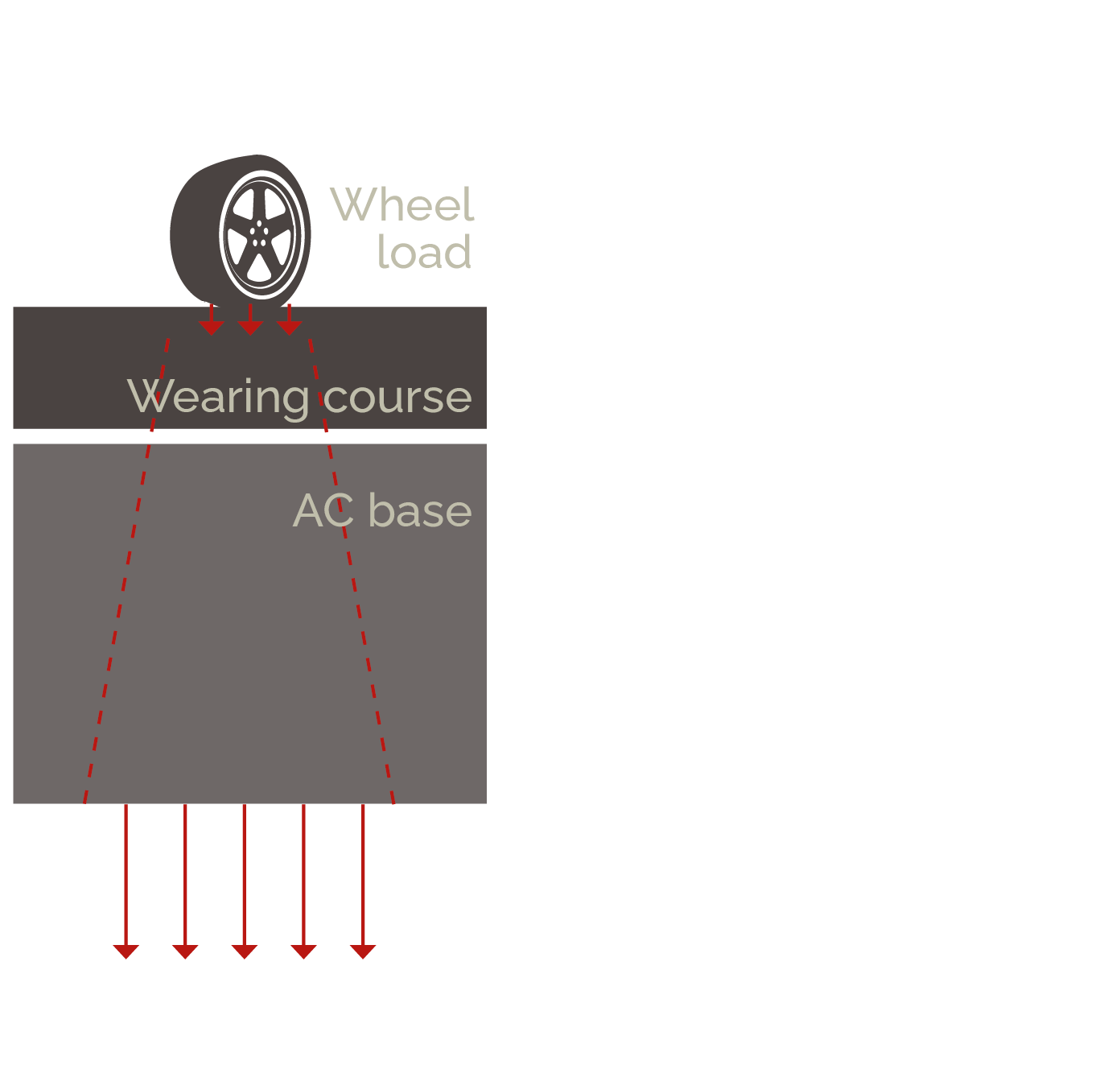
The purpose of a pavement is to take the force of traffic and spread it out as much as possible before it reaches the subgrade (the weakest part of the pavement). The stress applied by traffic is transferred through the pavement in a cone shape, widening as it goes. The width of the cone, or, how wide the force is distributed depends on the stiffness of the pavement layer. A stiffer layer distributes load over a wider area. However, if a layer is much stiffer than adjacent layers, it can increase the risk of pavement failure due to stress concentrations. The stiffness and other material characteristics need to be carefully considered to ensure all pavement layers work together in synergy.
The pavement design process aims to create a system of pavement layers that reduces the stress to acceptable levels where repeated loading does not trigger failure within the subgrade thereby maintaining serviceability.
Structural Asphalt Failure Mechanisms
There are two main structural failure mechanisms for structural Asphalt pavements – rutting and fatigue cracking.
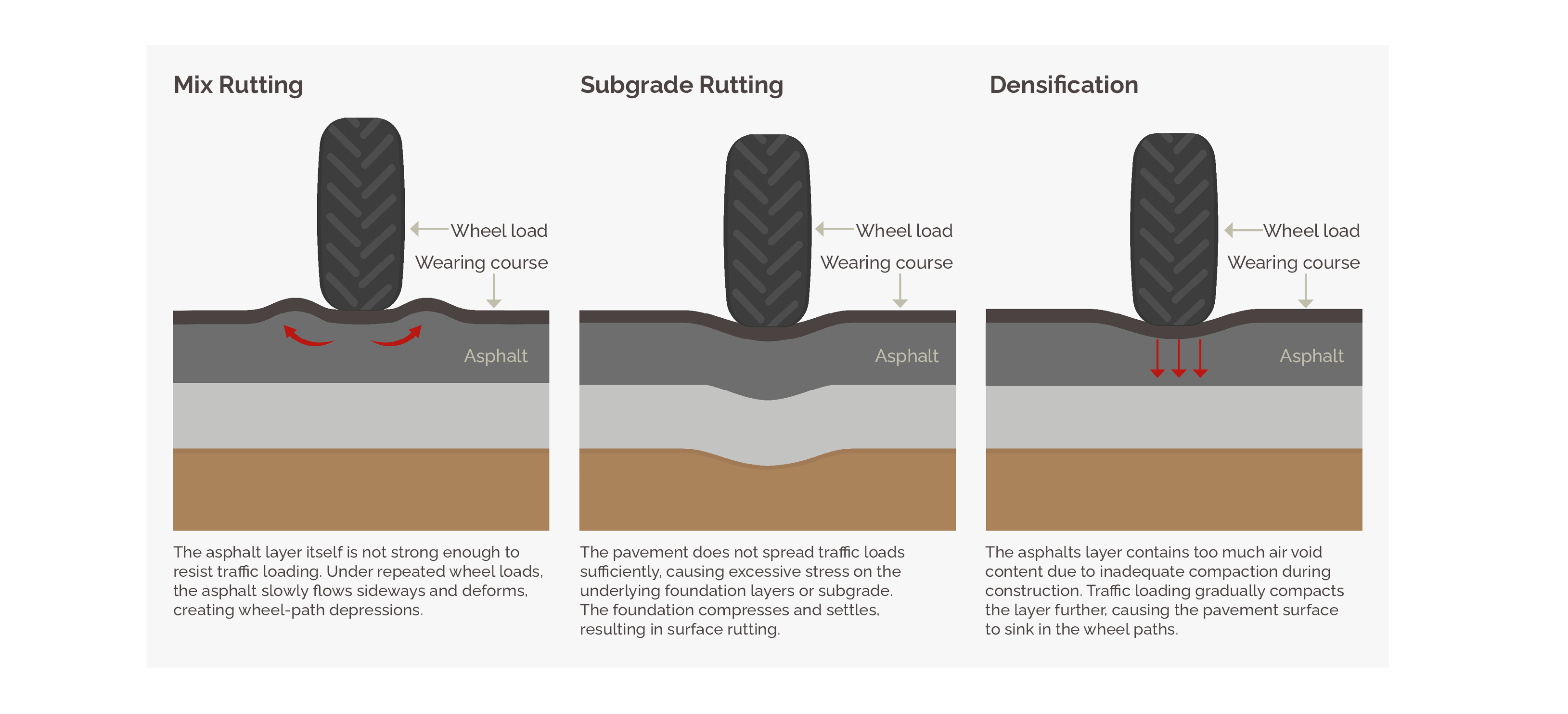
- RUTTING is the permanent deformation of the pavement layer under repeated load cycles. The rate of deformation for asphalt is strongly influenced by mix design volumetrics (proportion of aggregate and bitumen), binder properties, in-service temperatures, size of load, and duration of loading (traffic speed). Rutting can be due to:
- Asphalt Mix rutting: The asphalt layer itself is not strong enough to resist traffic loading. Under repeated wheel loads, the asphalt slowly flows sideways and deforms, creating wheel-path depressions.
- Subgrade rutting: The pavement system does not transfer traffic loading sufficiently, causing excessive strain within the subgrade. Under repeated loading the strain results in fatigue failure where the subgrade deforms.
- Densification (construction related): The asphalt layer void content is constructed outside ideal range. Traffic stress gradually compacts the layer further, causing a rut deformation at surface level, typically in wheel paths.
- FATIUGUE CRACKING develops when an asphalt layer has been overstrained for a period of time. The unsustainable stress is accommodated at first, but due to the load repetition eventually is unable to withstand the strain within the layer and cracks. The repeated loading and the magnitude of strain drives the rate of fatigue. Microcracks develop typically at the base of the structural layer (bottom-up cracking). Over time the microcracks further propagate through the structural asphalt layer and eventually reflect through the wearing course asphalt. The diagram below illustrates the three high level stages:

EME2 is a high-performance asphalt, engineered to mitigate rutting and cracking failure, providing predictable performance over its design life.
The Science Behind EME2
An asphalt mix is made up of two key materials, bitumen and aggregate. Typically mix design will aim to optimise the proportion of bitumen to aggregate to suit the specific stress environment.
- Bitumen coats and binds the aggregate fines providing cohesion and flexibility. The flexibility of the mix can be increased by increasing the binder content or by softening the binder.
- Aggregate creates the ‘skeleton’ that provides strength (rut resilience) to the mix. The strength of the mix can be increased by either increasing the angularity or altering the gradation of the mix.
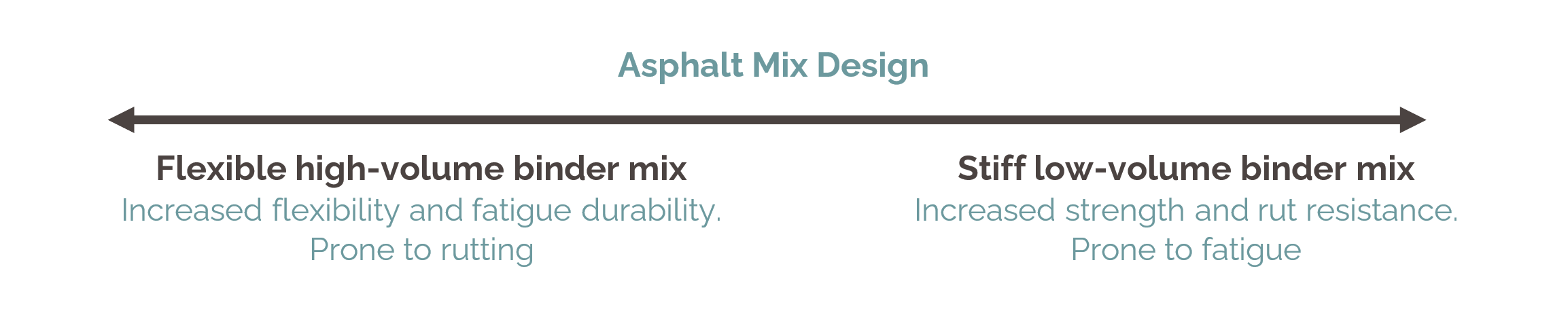
Structural strength comes from mechanical interlock of aggregate particles, however, at higher bitumen content the bitumen starts to counteract this particle-to-particle interlock. There is a trade-off between creating a stiff, high modulus mix that has a high structural capacity versus a flexible mix, lower modulus mix that has durability and fatigue resilience as illustrated below.
An EME2 mix design aims to incorporate both durability and structural strength due to its unique composition. The key characteristics of an EME2 mix are:
- Stiff, higher viscosity, lower penetration grade binder
The stiffness of the binder enables a higher bitumen content without compromising rut resilience. This higher volume of stiff binder enhances fine aggregate coating, improving durability and fatigue performance while providing a competent modulus. - Stress fatigue resilience - High binder volume
Higher binder volumes are widely recognised to improve the stress fatigue resistance of asphalt mixes. The volume of binder (10%-12% VB) in conventional structural mixes limit the fatigue stress life, especially when the strain of the layer is greater than 150 µε. EME2 has a higher binder content (12-15% VB) therefore is more fatigue resilient, especially at higher strain levels which is achievable as the volume of binder does not impact the rut resilient characteristics. - High softening point - Enhanced operational window
The binder is specifically manufactured to achieve viscosities higher than those of conventional binders, As a result, EME2 binders generally have a higher softening point (56-79°C), producing a stiffer, higher-viscosity binder with improved resistance to deformation and enhanced performance at elevated service temperatures. - A fine aggregate gradation
A finer aggregate gradation provides increased surface area for bitumen adhesion, producing a dense, homogenous mix which increases modulus and fatigue resilience.
The binder properties, in combination with high bitumen content and fine gradation creates a dense, high modulus layer improving stress transfer to the lower pavement layers. Because EME2 is much stiffer than conventional asphalt, it spreads vehicle loads over a larger area of the pavement (wider stress cone).
To illustrate the difference between a conventional dense graded mix and EME2, two theoretical pavement configurations have been presented below;
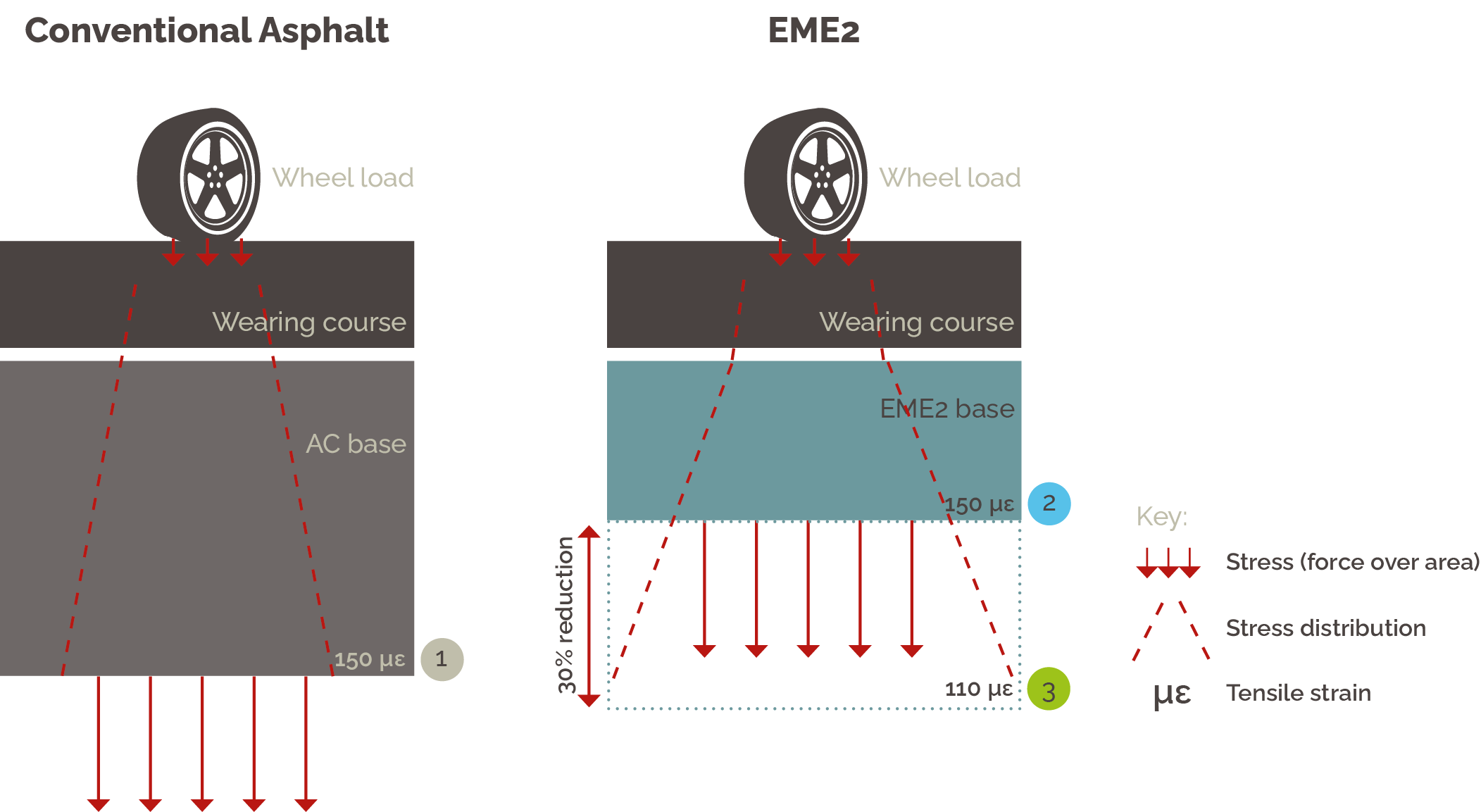
1. Conventional asphalt requires a greater layer thickness to control stress on underlying layers and control layer strain within the asphalt layer due to a lower modulus
2. EME2 can be designed at a lesser layer thickness to provide a similar stress on the underlying pavement and similar layer strain within EME2 layer compared to a conventional asphalt. Thickness reduction is typically 20 to 30% thinner due to EME2’s higher modulus and retaining more of the existing pavement structure.
3. Where EME2 is designed at the same layer thickness there is a lowered stress on the underlying pavement layers and a lower layer strain within EME2 layer compared to a conventional asphalt.
Performance Testing
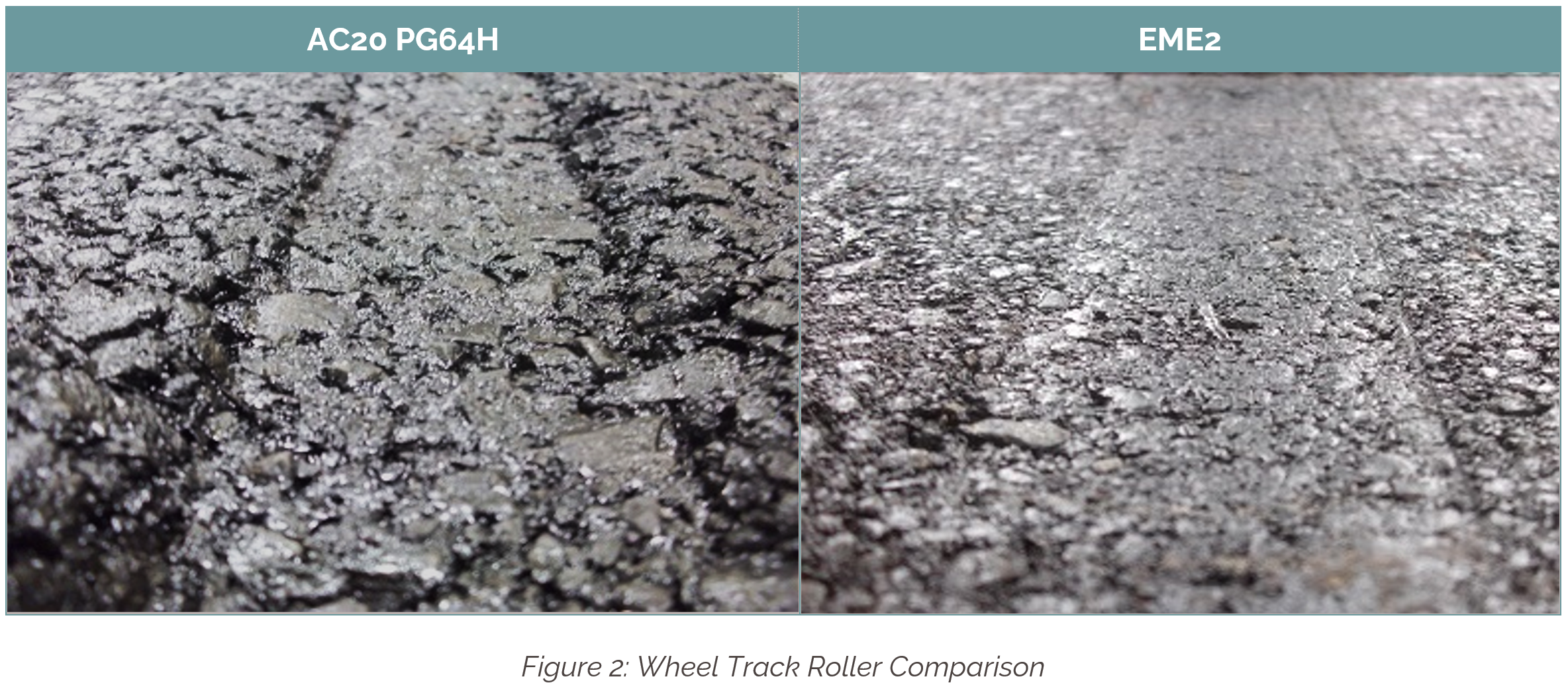
Performance testing with the Wheel Track Roller (WTR) and the 4-point bending test show the difference in rut resistance and fatigue resistance between an EME2 and PG64H AC20.
WHEEL TRACK ROLLER TESTING – Rutting Performance
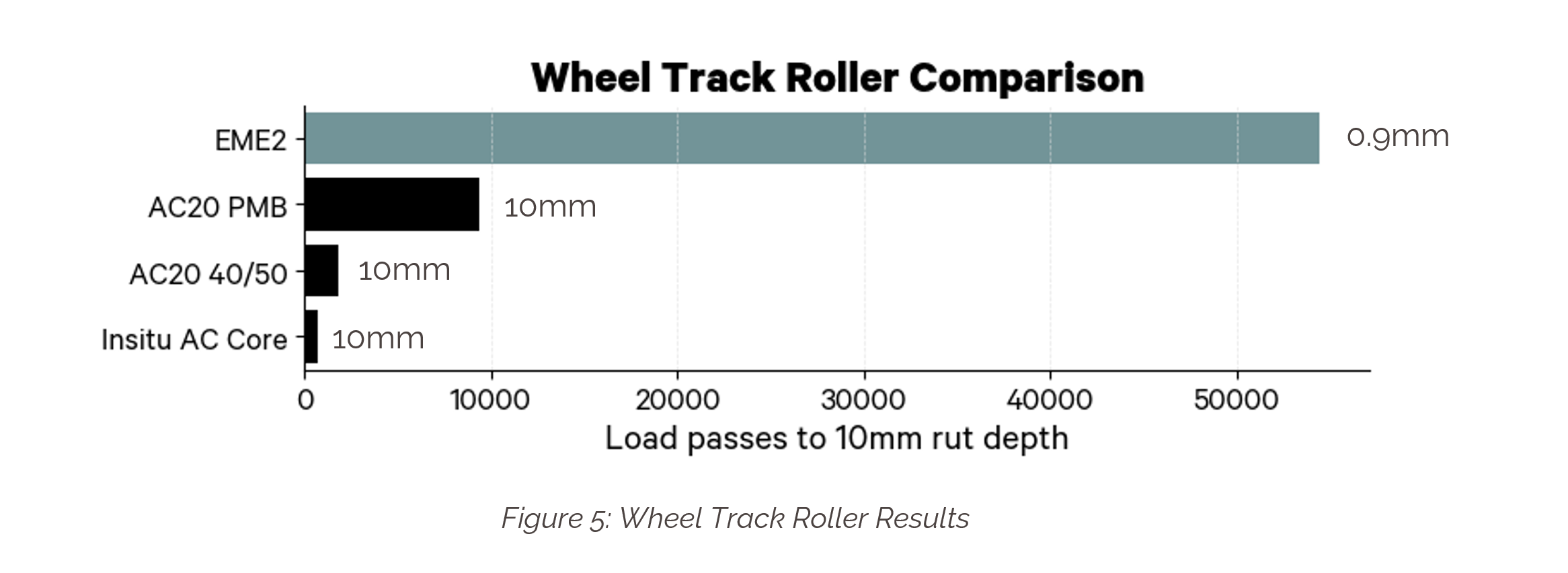
The WTR testing showed that after 10,000 passes, the AC20 developed 6mm of rutting while the EME2 was subject to 60,000 passes and developed only 0.9mm. The results of this test show that EME2 is considerably more resistant to rutting in the asphalt layer. Relating WTR back to the rutting failure mechanisms, EME2 provides a greater resistance to both mix rutting and densification.
4-POINT BENDING – Fatigue Performance
A common method for comparing asphalt mix designs is the use of fatigue transfer functions, which relate the tensile strain at the bottom of the asphalt layer to the allowable number of load repetitions. These functions predict the traffic loading an asphalt material can endure before its stiffness reduces to 50% of its initial value, providing an indication of the fatigue resistance and long-term performance of the mix under repeated loading.
During pavement design, the required fatigue resistance is determined by the intended design life and the magnitude and frequency of anticipated traffic loading. The tensile strain at the bottom of the asphalt layer can then be controlled through appropriate material selection or by increasing the asphalt thickness to reduce the strain demand. By balancing these factors, the pavement structure can be designed to achieve the required fatigue performance over its intended service life.
The fatigue transfer functions for three mix designs are plotted below. The slope of the fatigue function indicates how sensitive a mix is to changes in strain. The steeper the slope the less resilient a mix is to fluctuation in strain.
Pavement designers control the strain at the bottom of a layer – using the example from figure 1 with a design strain of 150µε the fatigue transfer functions predict:
- EME2: 22 million cycles
- AC14 (3000 MPa): 18 million cycles
- AC14 (4500 MPa): 6 million cycles
EME2 has significantly higher fatigue resistance across the lower strain range which is typically associated with long-life pavement design (100-170µε). Important to note that EME2 due to its significant modulus always tend to have lower induced strain values to conventional asphalts.

Expert Opinion Piece:
Designing with EME2 | Emile VanZyl
Principal Engineer, Downer
EME2 has been a route of self-discovery. I did not fully comprehend its versatility in the early days of becoming available in New Zealand. Initially, I considered EME2 primarily, as a high-performance asphalt for use in extremely heavily trafficked pavements where conventional asphalt mixes fail to provide adequate rut resilience. Over time, I found that EME2's benefits extend to legacy pavements. Often, legacy decisions have left many pavements structurally inadequate and overstrained. In these applications, designs with conventional asphalt mixes can’t be sustainably supported due to inadequate stiffness and fatigue resilience characteristics.
At Downer, we have worked with EME2 across a variety of projects and environments with a wide range of pavement constraints and it is an important tool in our toolbox. I have seen it time and time again where EME2 not only reduces the thickness but retains more of the existing pavement structure where alternative designs would have necessitated a complete reconstruction/dig out. Due to its stiffness, EME2 is able to manage the amount of structure loss more effectively whilst simultaneously lowering the amount of layer strain. In this case, construction risk is significantly reduced by minimising the risk of encountering localised soft spots as more of the existing pavement is left in place.
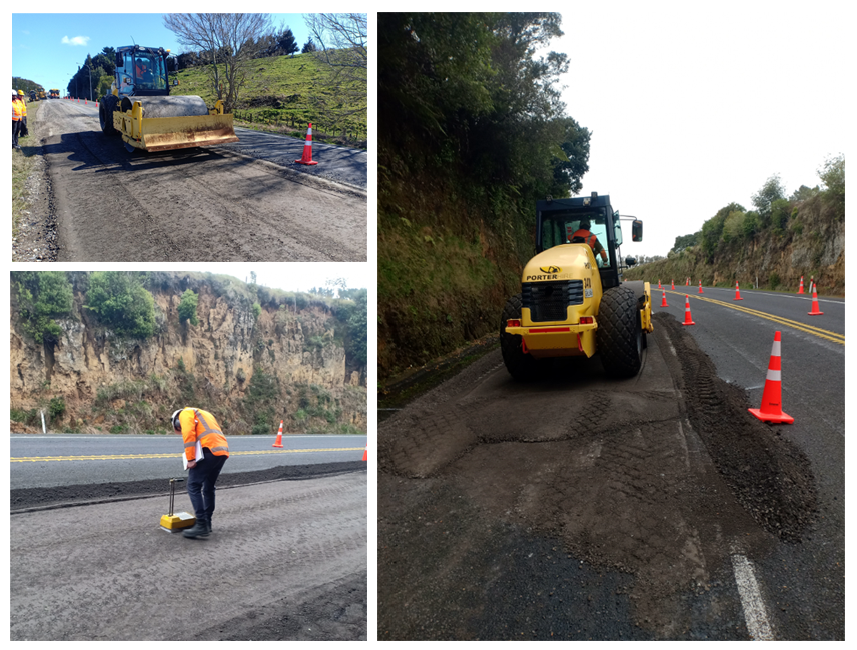
From a construction perspective, I have found EME2 to be an exceptionally flexible and accommodating mix. Static rolling has consistently been sufficient to achieve the compaction requirements of NZTA M32, reducing the need for more aggressive compaction methods. This makes EME2 particularly well suited to urban environments where existing services, utility crossings, and stakeholder sensitivities can constrain construction activities.
Lastly, as with any pavement material, EME2 must be incorporated within a pavement structure that allows it to perform as intended. While the mix offers exceptional stiffness and structural contribution, these same characteristics can make it susceptible to excessive stress if not appropriately accounted for in the pavement design. To address this, the development and adoption of a design criterion to manage overstressing of the EME2 layer is advocated, particularly in situations where it forms the dominant structural component of the pavement. This provides a practical mechanism to ensure the material's strengths are fully realised while maintaining long-term pavement durability and performance.

Expert Opinion Piece:
Working with EME2 | Dan Easterby
Strategic Surfacing Lead, Downer
One of the biggest surprises for paving teams encountering EME2 for the first time is that, despite being a very high modulus asphalt, it is not necessarily difficult to pave.
EME2 is typically easier to compact, requiring fewer roller passes and little to no vibratory compaction, while still achieving layer thicknesses of up to around 130 mm in a single lift. By delivering a stronger, thinner, and longer-lasting pavement, EME2 helps streamline construction through reduced milling depths, fewer paving passes, lower material volumes, and fewer truck movements. The result is a more efficient paving operation, shorter construction programmes, and reduced disruption to road users.
As a general rule of thumb, a 30% reduction in pavement thickness can translate to productivity gains of a similar order. The reduced thickness requirements also make EME2 particularly well suited to constrained urban environments, where minimising impacts on existing infrastructure such as kerbs, drainage assets, service covers, and tie-ins is critical. Combined with fewer truck movements, less milling, and shorter occupation times, EME2 is especially attractive for nightworks and high-traffic locations where minimising disruption to the public is a key project objective.
As crews become more familiar with EME2, they often find the mix delivers high-quality outcomes more consistently, making it easier to achieve target compaction, surface shape, ride quality, and specification compliance across the entire paving operation.

CASE STUDY 1:
Heavily Trafficked Pavements - Wairere Drive
Wairere Drive between Arthur Porter Drive and Te Rapa Road is a high-volume, high stress (23,369 ADT, 5%HVs) road on the Hamilton City Council network. In 2016, The intersection at Wairere-Te Rapa was showing significant distress with up to 60mm rutting in the wheel path leading into the intersection. A pavement investigation was conducted to determine the root cause of failure and propose a viable, high-performance renewal.

The existing structural pavement consists of 400 mm of AC20 asphalt that was completed in 2013. Falling Weight Deflectometer (a service operated by Road Science) results indicate that the pavement is structurally sound with greater than a 100-year fatigue life based on the Austroads pavement design tensile fatigue criteria for cracking.
The worst of the rutting is concentrated at the intersection, suggesting poor asphalt performance under slow, static loading conditions. Assessment of in-situ cores identified that rutting is concentrated in the upper 150 mm of the asphalt. Therefore, rut resistance is the governing design criterion for this renewal.
Laboratory testing was conducted to determine relative performance of different mix designs given the site-specific factors. An in-situ core was tested in the wheel track roller which identified poor performance based on the current loading at the intersection. The Wheel Track Roller testing at 10s load duration and 25°C showed that EME2 performed significantly better in terms of rut resistance measured in load passes to 10mm. In fact, the EME2 samples did not reach 10mm rut depth even after 60,000 passes.
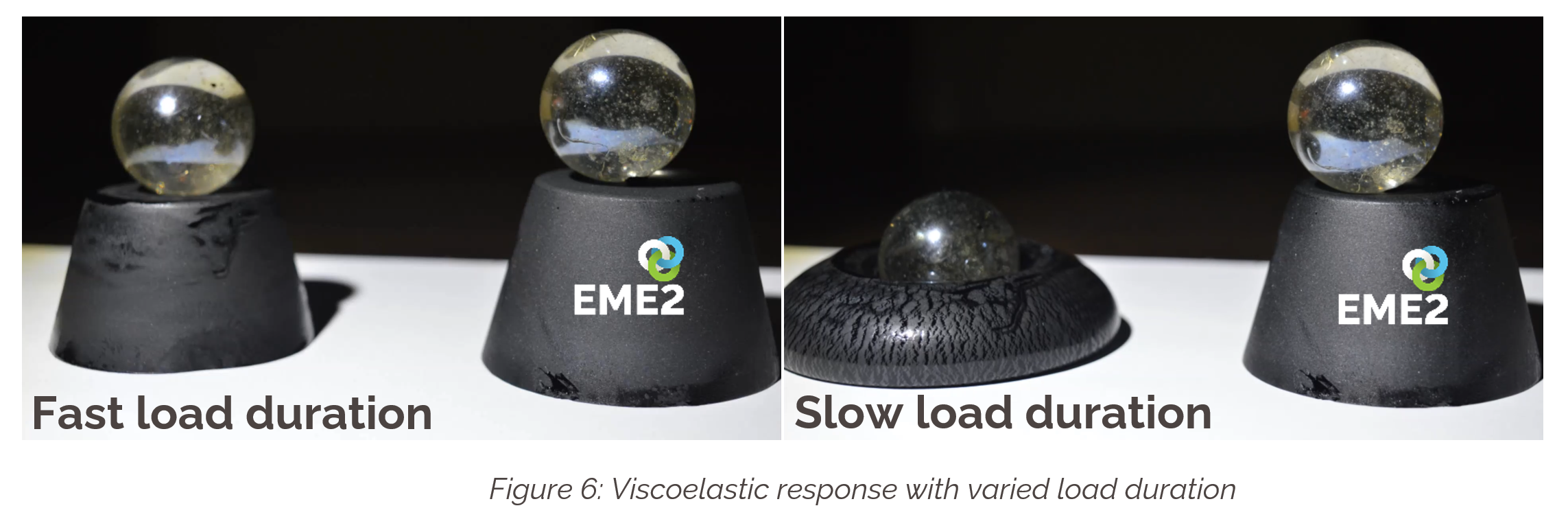
Asphalt is a viscoelastic material, meaning that, it will respond more solid-like or more liquid like, depending on a combination of:
- the size of the load (how heavy vehicles are)
- the duration of load (how fast vehicles are travelling)
- the temperature of the asphalt at the time of loading
Asphalt can respond stiff and elastic under fast, light, and/or cold conditions, but softer and more deformation-prone under slow, heavy, or hot conditions.
Two samples were recorded with the same load at the same temperature overtime. Initially, the load does not deform the samples – this is the fast-loading condition. After some time, the AC40/50 binder has deformed under the load of the marble while the EME2 sample has remained the same.
The site investigation identified that rutting at the intersection due to slow loading, is the primary distress. The worst-case scenario for Wairere Drive is a hot summers day with a stationary (long load duration) truck at the intersection.
The repeated load triaxial test (RLT) can vary all three variables to understand material response to the load environment. The graph below explores how varying the load duration changes the amount of load cycles to create 10mm of rutting at high pavement temperatures, and shows the high performance of EME2 across a range of load durations.
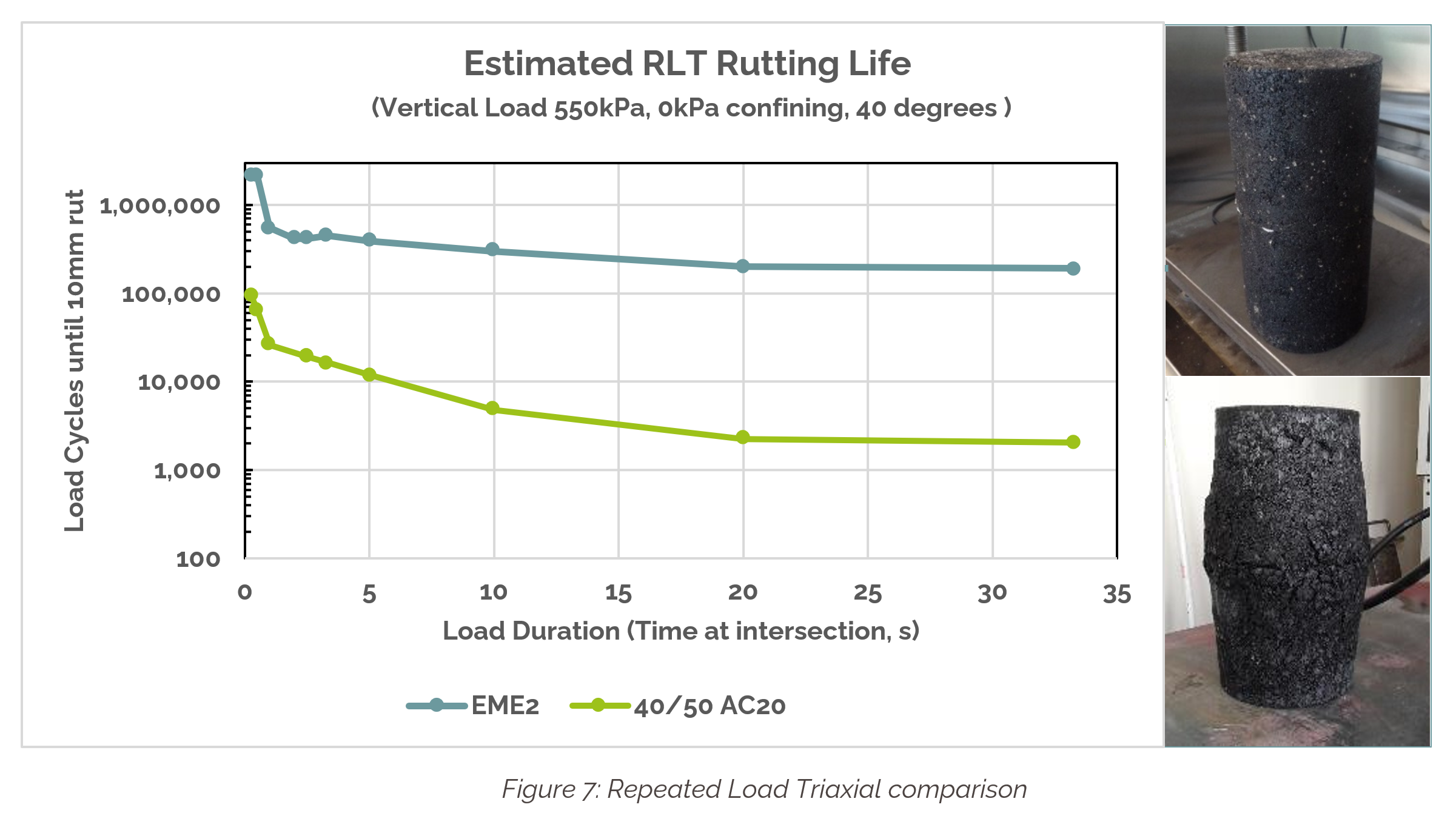
Based on the results of the site investigation and laboratory testing. A design of a 100mm EME2 inlay with a 50mm DG10 wearing course was the proposed design.
PERFORMANCE TO DATE |
Highspeed rutting data is available from 2013 and cracking from 2025. A limitation of assessing highspeed rutting data is that it is not possible to determine whether the rutting is occurring in the wearing course or the base layer without taking cores.
The rutting data shows that over a 4-year period, the 400mm AC20 pavement has developed significant rutting with a mean 10m interval rut depth of 12.75mm in the right wheel path and 9.5mm in the left. The EME2 inlay has had consistent performance over 10-year period with an average increase of between 0.25 – 2.25mm. There has been no maintenance data recorded. The cracking measurement for the LCMS2 laser scanner recorded no cracking.

CASE STUDY 2:
T2w Rehabilitation Accelerated Programme - Delivered by Downer
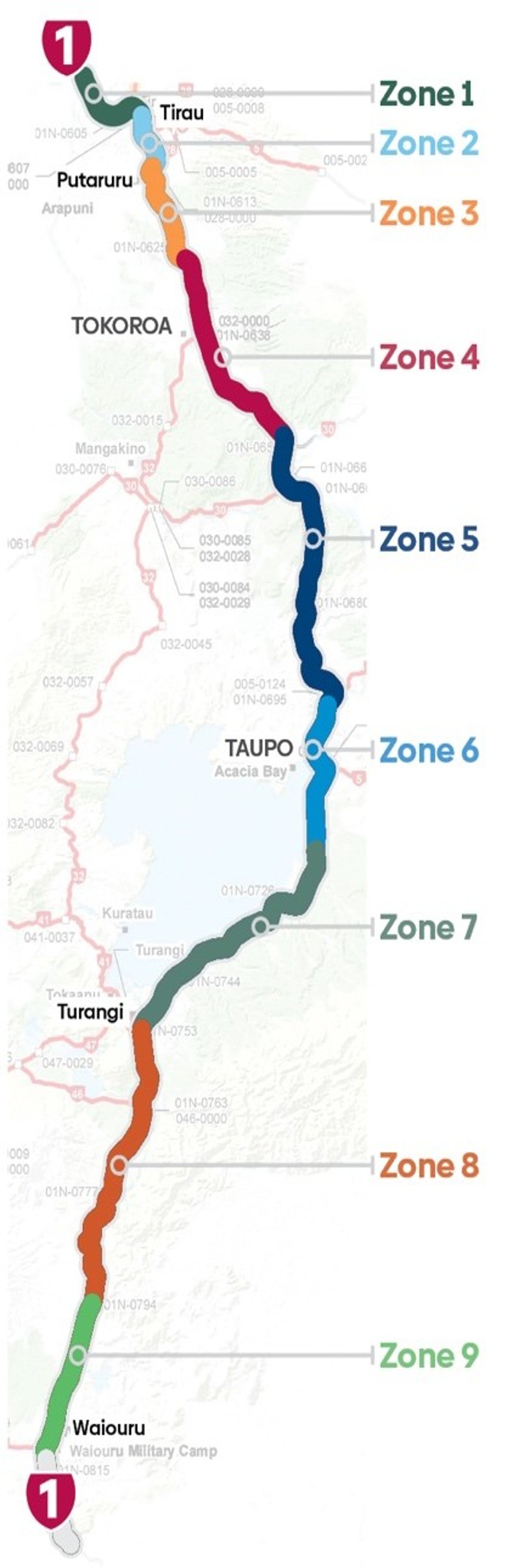
SH1 between Tīrau and Waiouru is one of New Zealand's most critical highway corridors to maintain. The corridor presents almost every challenge that a pavement designer could face: high volumes of heavy freight traffic, variable subgrade quality, complex urban corridors, and major temperature extremes. Much of the existing pavement is aged and was not designed for the traffic loading it now carries.
To address these challenges, the Tīrau to Waiouru (T2W) rehabilitation project was initiated. The programme accelerated four years of pavement renewals into two construction seasons, making it one of the most ambitious rehabilitation programmes delivered on the network to date. Most of the first construction season was undertaken under full road closures, allowing construction activities to proceed without the operational constraints typically imposed by traffic management requirements. In the second season, full zone closures were not feasible, which favoured designs that limited disruption to the public, were fast to construct while still meeting performance requirements. The design philosophy included typically a structural design life of 25 years with 95% project reliability – requiring high performing mix designs.
Many sections of the corridor are heavily constrained by existing infrastructure and legacy pavements, limiting the available pavement thickness and often dictating an inlay approach, with minimal change in finished surface levels. Sensitive subgrades combined with shallow pavement structures favoured designs that mitigated disturbance to the existing materials. The high modulus of EME2 enabled construction of inlays and partial inlays where alternative designs required significant reconstruction dig outs.
EME2 at Site 103 | Jasmeet Singh
Design Engineer, Downer
Site 103 in Tirau was one of the more challenging sections on T2W. The site was heavily constrained, with bridge decks, kerb and channel, and guardrails requiring the finished asphalt surface to match the existing road level. Tight horizontal curves, vertical grades and low traffic speeds coupled with high traffic volumes, created a high stress environment. The site is located close to Tirau township, requiring construction activities to be carefully managed to minimise disruption to road users and the local community.
Two design structural asphalt options were assessed: an EME2 inlay and an AC20 inlay.
While both achieved the required structural outcome, the EME2 design was favoured. The EME2 design required only 125-130 mm of asphalt compared with 210-220 mm for the equivalent AC20 treatment reducing total mill depth and allowing for construction in a single lift. The reduced mill depth minimised disturbance to the existing pavement structure and, where competent in-situ materials were present, allowed for parts of the existing structure to be retained.
The EME2 design also carried less construction risk and uncertainty as it reduced the likelihood of creating soft spots, undercuts and unplanned dig outs during construction. The contingency design for encountering soft spots differed too, with EME2 requiring an extra 50mm layer depth while the AC20 required a digout, undercut and reinstatement of 300mm granular material. Testing identified approximately 5% of the site would need further pavement investigation with a Benkelman Beam compared to 30% for the AC20 section – i.e. six times more pavement length was exposed to the risk of unplanned dig outs or deeper slow production treatment intervention.
Thinner base layer, reduced mill depth, single lifts and lower construction risk was a critical outcome as it created the opportunity for shorter traffic disruption windows. The design and construction requirements associated with the AC20 option would have made the treatment impractical. Without EME2 as an available design option, pavement designers may be forced toward deeper and more invasive conventional asphalt treatments. This can increase exposure to subgrade variability, soft spots, undercuts, programme uncertainty, material disposal, material import requirements and stakeholder disruption.

EME2 Supply
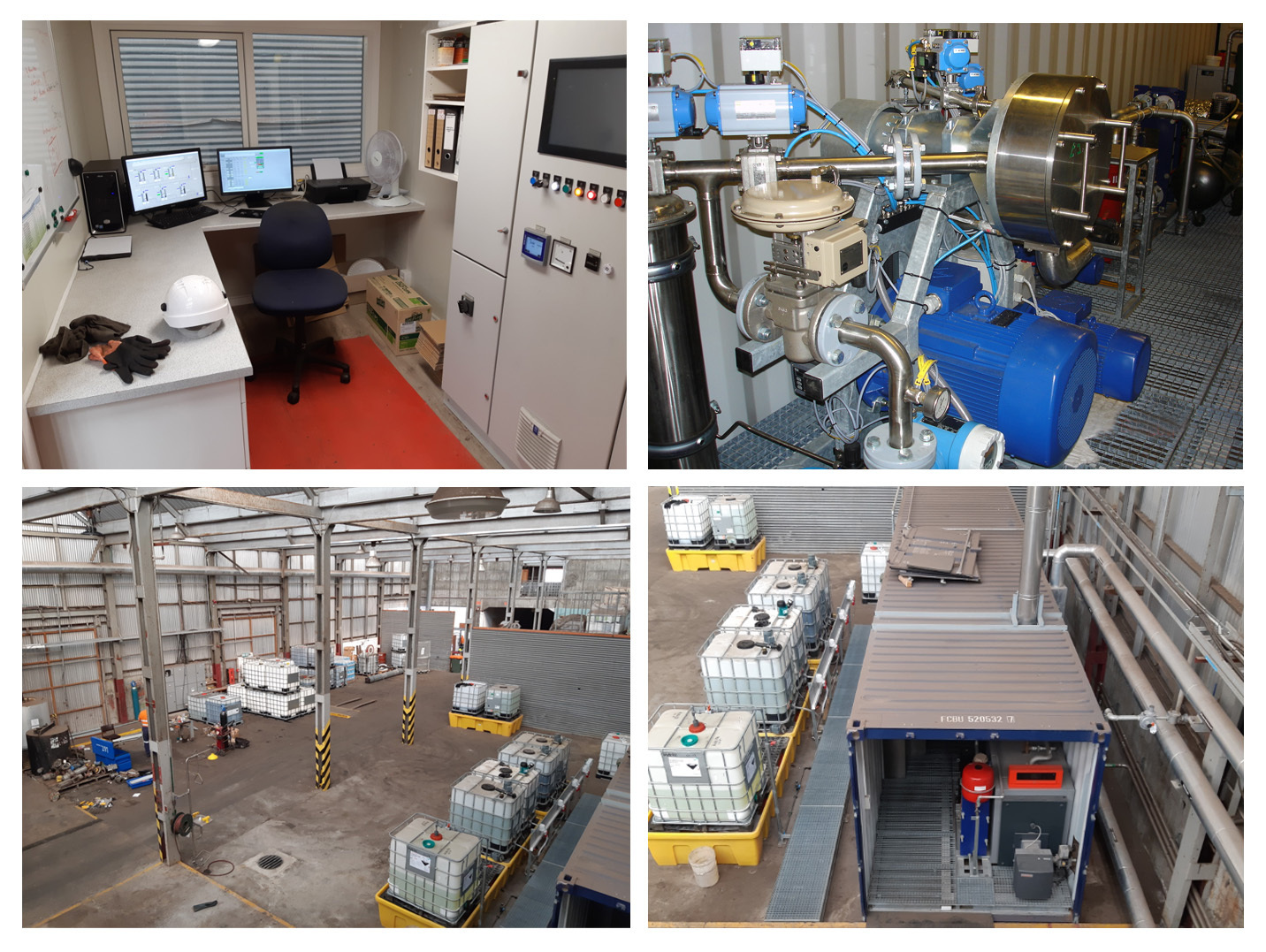
EME2 asphalt mixes are available nationally and can be sourced for projects across New Zealand. These mixes can be designed and produced using high-quality aggregates from any quarry that meets NZTA M32: 2021, ensuring consistent performance and compliance regardless of location. Where project demand is high, a dedicated mobile asphalt plant can be established to simplify project logistics.

References
- Arnold, G., Collins-Gargan, R., Senf, S., & Phayer, C. (2021.). Fatigue performance assessment of asphalt mixes. Road Science.
- Arnold, G., Rogers, D., Hall, S., & Mudgway, G. (2017.). High modulus asphalt to prevent rutting at intersections. Road Science.
- Austroads. (2025). Guide to pavement technology part 2: Pavement structural design (Edition 5.0, Publication No. AGPT02-25). Austroads.
- Waka Kotahi NZ Transport Agency. (2021). NZTA M32: Specification for high modulus asphalt (EME 2). New Zealand Transport Agency.
- Waka Kotahi NZ Transport Agency. (2021). High modulus asphalt (EME2) specification notes (M32). New Zealand Transport Agency.
- Road Science. (2025). EME2 product sheet.